

### Blog Post:
Key Takeaways
- The best Automatic Stirring Pot models reduce manual effort, but real-world results (especially with sticky or thick foods) can be inconsistent.
- Major pain points are cleaning difficulties, battery life, and lack of detailed cost and time-savings data versus traditional pots.
- Critical topics like energy usage, warranty, and durability remain underreported in most competitor articles—know the full picture before buying.
The Core Concept: What is an Automatic Stirring Pot and Why Use One?
An Automatic Stirring Pot, also known as an auto stirrer cooking pot, is a kitchen appliance designed to keep food moving without any manual stirring. These devices aim to help you multitask, avoid burnt food, and achieve more consistent results with hands-free automation. Models range from built-in stirring slow cookers, like the Crock-Pot iStir, to standalone battery-operated stirrers that can go in your existing pans or pots.
Busy home cooks, parents, and anyone trying to streamline prep for soups, sauces, risottos, or even tempering chocolate may find an automatic stirring pot cuts down on routine labor in the kitchen. But while the convenience factor is huge, performance (especially for sticky or thick dishes) varies from model to model.

In addition to cookers with built-in stirring, small portable stirrers are gaining popularity on social media and ecommerce platforms, similar to the rise of gadgets like the Portable Air Fryer and Electric Salt and Pepper Grinder. The core value is freeing your hands and focus for other tasks while the machine handles the repetitive motion.
Step-by-Step Guide: How to Use an Automatic Stirring Pot
- Select the right pot or pan: Most standalone auto stirrers work best with nonstick cookware that has flat, smooth surfaces. Check device compatibility for size (usually between 7–11 inches wide).
- Charge or plug in your device: For battery models, give them a fresh charge. Plug-in models like the iStir don’t need charging but require electricity.
- Add your ingredients: Get everything into the pot as usual. If making thick or sticky foods (like risotto or custard), be aware these devices may struggle compared to manual effort.
- Attach and start the stirrer: Place the auto stirrer in the pot, ensuring contact with the base for best performance. For smart cookers, simply select your desired program.
- Set timer or stirring speed: Some units offer multiple speeds. Start on the lowest and gradually increase as needed (experiment for best results).
- Supervise and adjust as needed: While these devices are hands-free, don’t stray too far—check for splattering, food building up, or battery running low.
- Power off before removing: Always turn off the device before taking it out to avoid hot splashes and prevent the legs from detaching inside the pot.
- Clean thoroughly: Food particles can get stuck in moving parts. Clean immediately after use, paying special attention to intricate legs and feet.
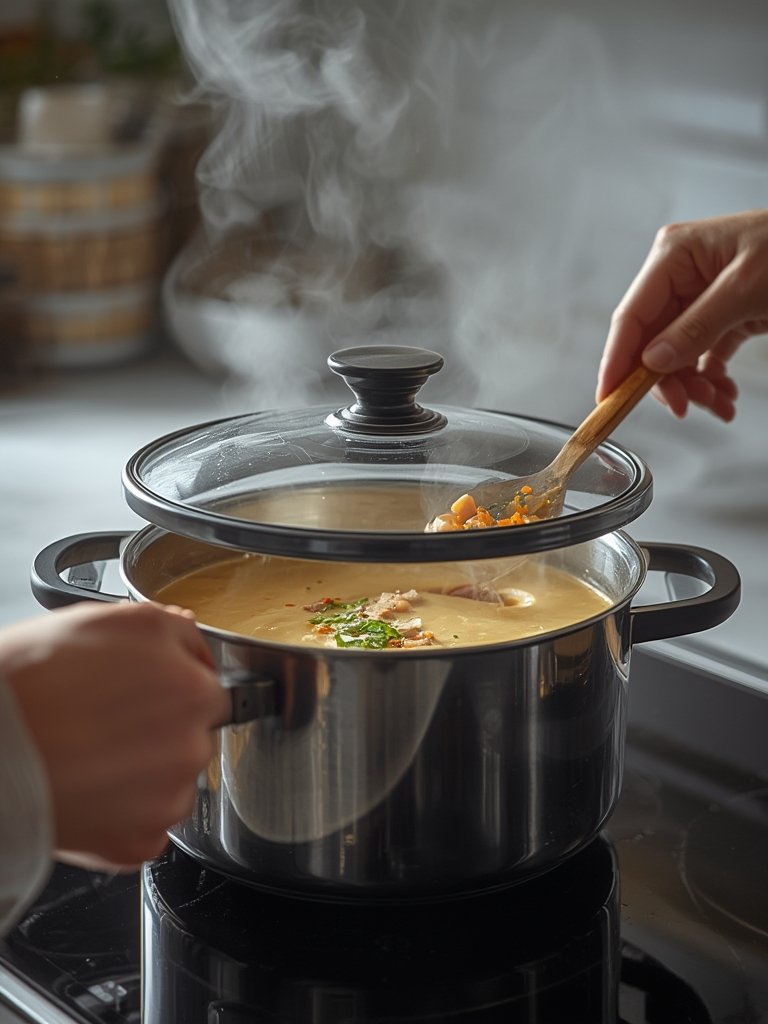
If you love smart kitchen gadgets, consider pairing your stirring pot with a Smart Kitchen Scale for automated precision, or use devices like an Electric Warming Tray to keep finished dishes perfectly warm.
Advanced Analysis & Common Pitfalls: What to Watch Out For
Early adopter reviews and hands-on tests have surfaced several recurring issues—and some notable advantages—when using automatic stirring pots or auto stirrer cooking pots. Here’s where reality often diverges from marketing:
- Stirring power: Many battery-powered models use vibration or gentle rotation. They frequently struggle with thick mixtures, mashed or sticky foods (for instance, cheese sauces), sometimes just vibrating in place without actually stirring. (source)
- Splattering and mess: Because most standalone stirrers don’t include lids, gentle action can cause sauces or soups to splatter if filled high. Always fill to below the rim and supervise.
- Cleaning headaches: Food often gets trapped inside the legs or in the nooks of stirrers, especially with cheesy, sticky, or thick recipes. These parts can be hard to wash by hand. (source)
- Battery Life: Expect 2 hours of intermittent operation per charge for standalone units, sometimes less over time. Plug-in pots like the Crock-Pot iStir sidestep this, but require access to an outlet. (source)
- Removal risks: If you don’t power off before extracting the stirrer, you risk detaching its legs and getting splashed with hot food. (source)
- Poor performance in crowded or deep pots: Crowded pans prevent proper movement, and deep pans can defeat the device’s reach. For larger volumes, a Countertop Dishwasher may make cleanup easier after batch cooking.
- Unclear cost, time-saving, and warranty information: Most brands don’t provide usage cost breakdowns, long-term maintenance estimates, or detailed warranty information. (source)
Below is a concise model comparison for easy scanning:
| Model | Stirring Speed | Battery Life | Programmable Settings | Capacity |
|---|---|---|---|---|
| Crock-Pot iStir | Automatic stirring (details unspecified) | Plugged electric (no battery) | Digital timer, warm mode, multi-settings | 6.5 Qt |
| Generic Auto Stirrers | 3 vibration-based speeds | ~2 hr intermittent (rechargeable) | Speed settings only | Fits 7–11 inch pans |
| Stirr | Gentle to faster (struggles with thick sauces) | ~2 hr on/off (rechargeable) | Speed adjustment | Best for 7–11 inch nonstick pans |
| Robo Stir | Continuous, weakens with thickening mixtures | Not specified | Not specified | Silicone feet to 550°F, standard pots |
While you can expect qualitative time savings (freeing your hands for up to 45 minutes at a time), there’s no reliable data yet on exact minutes or power savings. Most traditional pots have a lower upfront price and decades-long lifespans, whereas battery auto stirrers cost around $20 CAD, need charging, and may require more involved cleaning and eventual replacement.

Interested in kitchen appliances that cut down more than one step? Explore options like the Rice Cooker & Steamer for hands-off meal prep or a Nugget Ice Maker for premium drinks without the wait.
Conclusion: Should You Buy an Automatic Stirring Pot?
Automatic stirring pots can absolutely make busy meal prep easier, freeing you from constant stirring and allowing better multitasking. However, effectiveness hinges on what you cook. If you mostly make thin simmering dishes, these devices offer true hands-free value. For sticky or thick recipes, expect some manual intervention—and plan on extra cleaning time. If cost, time, and durability are your top concerns, you may prefer a high-quality traditional pot or a versatile appliance like a Smokeless Indoor Grill.
Ready to try hands-free cooking? Start with a basic model or the Crock-Pot iStir, but always check the warranty and maintenance details. The Automatic Stirring Pot can transform your workflow if you know what to expect.
Still deciding? Compare other trending kitchen gadgets in our reviews and find your perfect fit for modern cooking!
FAQ
Do automatic stirring pots work for thick sauces and stews?
Most struggle with thick, sticky recipes like risotto, caramel, or cheese sauces. For best results, use with broths, soups, or thin sauces—and stir manually as needed for thick dishes.
How long does the battery last on standalone auto stirrers?
Battery models typically last about 2 hours with intermittent use, but performance can decline with age. Plug-in models like Crock-Pot iStir have no such limit but require access to power.
How do you clean an auto stirrer?
Remove promptly and clean by hand with a brush, paying close attention to legs and joints where food can get trapped. Some models are dishwasher safe, but always check the manual.
Are automatic stirring pots worth the investment?
If you often cook foods prone to burning or enjoy multitasking, they can be worth it. Just be realistic about extra cleaning and their limitations with certain recipes.
Is there any official warranty or certification?
Warranty and safety certification details are rarely published. The Crock-Pot iStir is praised for reliability in reviews, but most battery-powered stirrers lack visible certification info.
—