

Smart Meat Thermometer technology is changing the way home cooks and grill enthusiasts achieve precise doneness, tackling the challenge of overcooking expensive meats without babysitting the grill.
Key Takeaways
- The smart meat thermometer market is expanding rapidly, fueled by demand for wireless and app-connected cooking solutions.
- Bluetooth-enabled models currently dominate, but Wi-Fi options are growing for longer range and reliability.
- Users must weigh convenience against potential connectivity hassles and real-world accuracy concerns before buying.
- Understanding the Smart Meat Thermometer
- How to Use a Smart Meat Thermometer: Step-by-Step
- Advanced Analysis & Common Pitfalls
- Conclusion
- Smart Meat Thermometer FAQ
Understanding the Smart Meat Thermometer
A smart meat thermometer is a wireless device that connects to your smartphone or tablet via Bluetooth or Wi-Fi. It monitors internal meat temperature in real-time and notifies you when your food reaches the ideal doneness. This technology is ideal for grilling, roasting, smoking, and sous vide—any time you want accuracy without standing by the oven or BBQ.
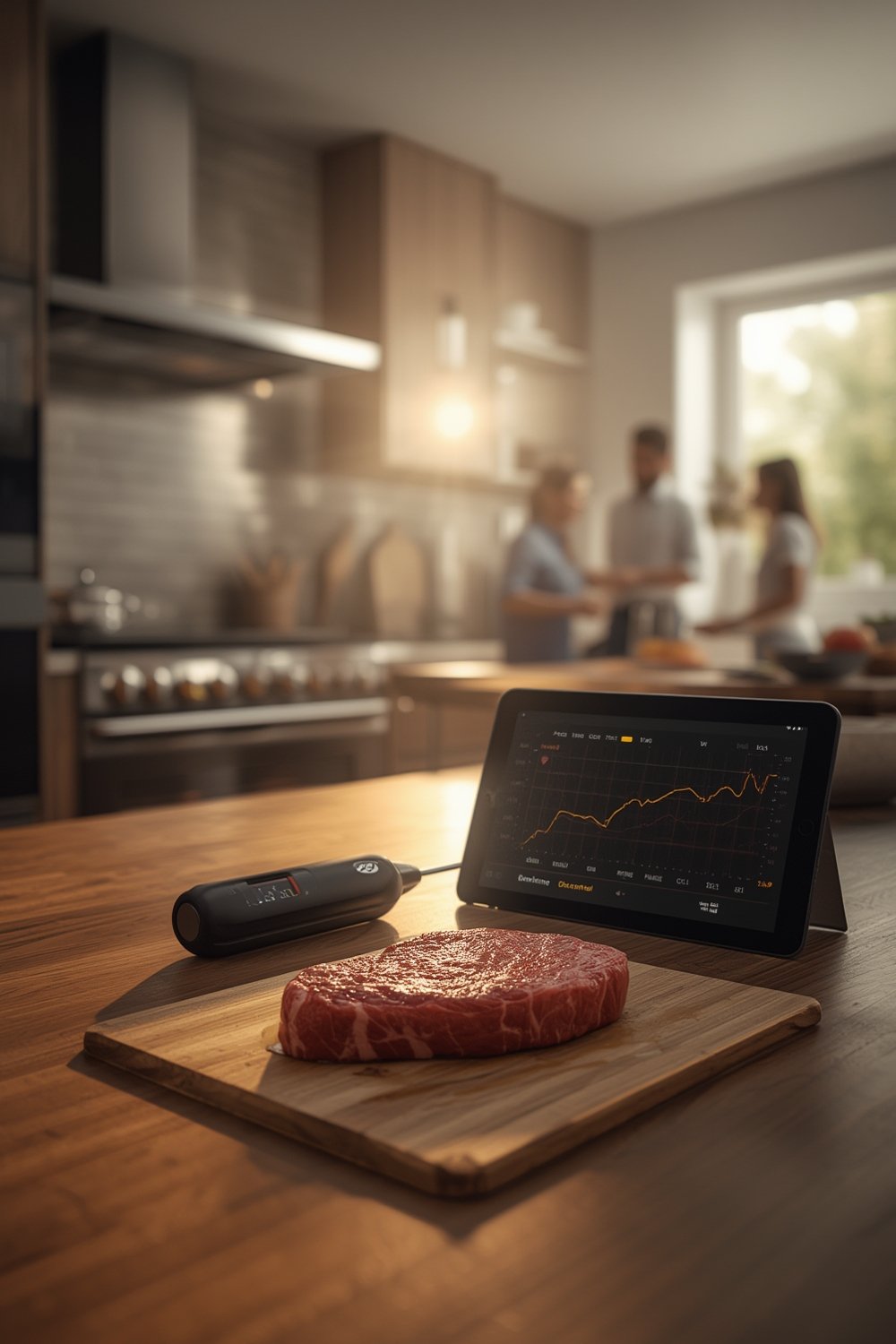
The global smart meat thermometer market hit $275.7 million in 2024 and is forecasted to more than double by 2035 thanks to the rise of smart BBQ and home automation trends. Bluetooth models like MEATER Plus and iGrill dominate, but Wi-Fi models are catching up.
Unlike traditional instant-read thermometers, the smart category eliminates cable clutter and lets you monitor from the couch, garden, or even across town, depending on app range. These tools are especially valuable if you routinely prepare premium cuts or want to master complex techniques on a smokeless indoor grill or an adaptive induction cooktop.
North America leads the way with over 60 percent market share as of 2024, with unit sales growing swiftly (source).
How to Use a Smart Meat Thermometer: Step-by-Step
Learning to leverage this kitchen gadget ensures less guesswork and more perfectly cooked meals. Here’s a step-by-step guide that works from grilling a steak to slow-roasting brisket.
- Download & Set Up the App
Install your model’s mobile app before cooking (example: MEATER, Weber iGrill). Create a user profile and run a firmware update if prompted. This improves reliability and feature access. - Charge and Pair the Thermometer
Fully charge the probe in its dock. Power on and pair via Bluetooth or connect through your home Wi-Fi, following app instructions. - Insert Probe in Meat
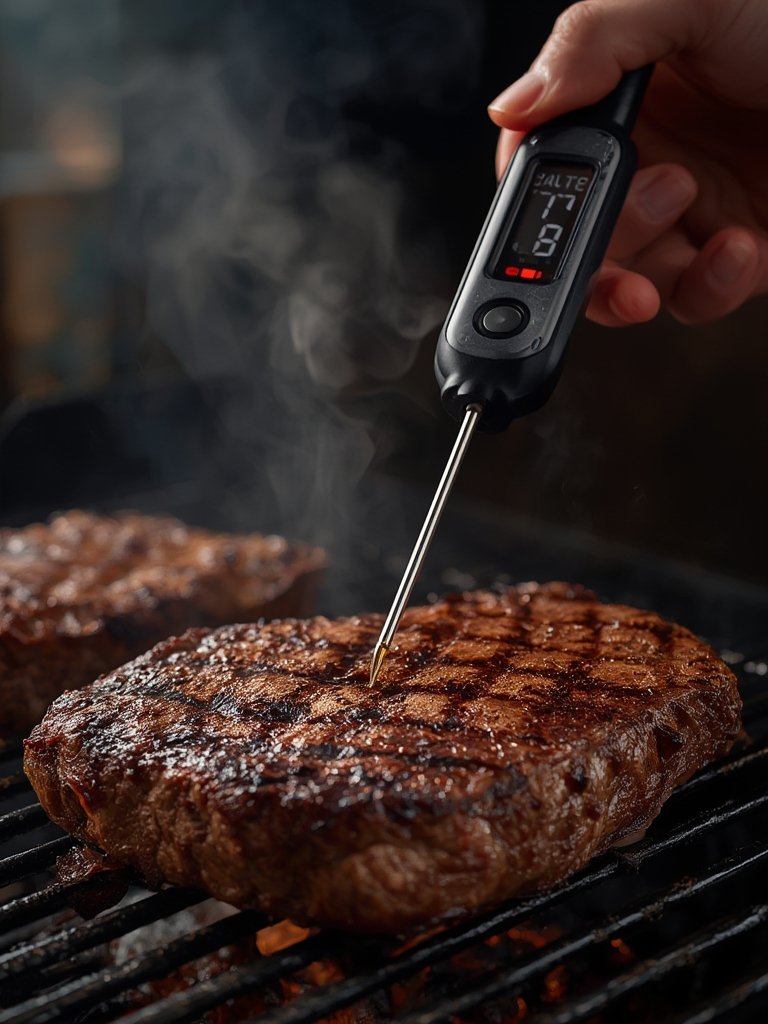
Insert the entire sensor tip through the meat’s thickest part, ensuring accurate core temperature readings—not near fat or bone. - Select Recipe or Set Target Temp
Use preset timers for beef, chicken, fish, or custom setpoints for sous vide. The app’s doneness guides take the guesswork out for beginners. - Start Cooking and Monitor Progress
Place your meat in the oven, grill, or smoker. Monitor real-time temps remotely—most apps show time-to-ready and send alerts. - Rest and Serve
Follow the app’s “carryover” suggestions—a few degrees before serving allows for juicer cuts and no overdone surprises.
- Always check your app notifications—unless you have a Wi-Fi model, going out of range can cause missed alerts or disconnects.
- Clean the probe after every use (hand-wash only, unless user manual allows dishwasher or waterproof rating).
- Store with its charging case to maintain battery health for your next session.
Want more kitchen automation? Pair your smart meat thermometer with a foldable food warming mat or streamline meal cleanup with a countertop dishwasher.
Advanced Analysis & Common Pitfalls
No product is perfect, and smart meat thermometers have their challenges. Here’s what to be realistic about before investing and what to watch for.
| Feature | Bluetooth Models | Wi-Fi Models |
|---|---|---|
| Wireless Range | Typically 10-165 feet, limited by obstacles. | As far as your network/Wi-Fi extender reaches—can monitor from anywhere. |
| Battery Life | 16-24 hours, rechargeable. | Similar, but frequent connection attempts may drain faster. |
| Setup Complexity | Simple Bluetooth pairing but subject to dropouts. | Slightly more complex, sometimes needs network troubleshooting. |
| Price Range* | $$-$$$ | $$$+ |
| Data/Integration | Basic logging and alerts. | Cloud sync, possible voice assistant control. |
*Exact prices vary by brand and feature set; see current models online.
Common Pitfalls:
- Connectivity dropouts: Thick walls, outdoor grills, or going out of range can break Bluetooth links. Wi-Fi helps but may add setup steps or require repeat logins.
- Sensor placement errors: If the probe isn’t centered in the thicket part, readings can be several degrees off—risking under or overcooked meat.
- Battery/charging issues: Forgetting to charge means the probe won’t work at all. Always recharge between cooks.
- Water resistance limits: Few probes are truly dishwasher-safe. Submerging can kill even “waterproof” models if not IP-rated.
- Mobile app bugs: Some users have reported app crashes or failed updates—always keep your app and probe firmware up to date.

It’s worth checking out additional kitchen tech, like a USB rechargeable pepper grinder or a home ice cream maker, for other ways to automate tricky culinary tasks. If you’re a frequent meal prepper, pairing your thermometer with a handheld vacuum sealer keeps pre-seared proteins fresh and safe.
According to sector research, the projected growth in Bluetooth models is outpacing wired alternatives, but Wi-Fi is closing the gap as network tech improves. (WiseGuy Reports)
Conclusion
Smart meat thermometers are rising in popularity because they provide convenience, confidence, and the promise of perfectly cooked results—if used correctly. While setup can present learning curves and technology always carries a risk of hiccups, a little practice makes them an invaluable tool for both weeknight dinners and backyard feasts. If you’re ready for hands-free precision, consider investing in a smart meat thermometer and take back your time around the grill or oven.
Thinking about other upgrades? Explore our guide to the best smart kitchen scale or check out the highest rated nugget ice makers for your home bar.
Ready to try a smart meat thermometer? Browse reliable brands, compare tech specs, and read user reviews before your next BBQ or holiday roast.
Smart Meat Thermometer FAQ
Will a smart meat thermometer work in a smoker or on a grill?
Yes. Most wireless models are heat resistant and designed for outdoor grills and smokers. Just check the probe’s max temperature rating and ensure the transmitter (if included) stays outside the hottest zones.
Does Bluetooth or Wi-Fi offer better performance?
Bluetooth is easier to set up but has limited range. Wi-Fi models let you monitor from anywhere with internet. Choose based on your needs and cooking habits.
Are smart meat thermometers dishwasher-safe?
Very few are. Most require gentle hand-washing. Submerging non-waterproof models can cause permanent failure. Look for probes rated IPX7 or higher if you want more water resistance.
How accurate are smart meat thermometers vs. traditional probes?
High-quality models are typically accurate within 1-2 degrees when inserted properly. Cheaper versions may show larger variation, especially if the probe is mispositioned.
Can I use them for foods other than meat?
Yes, you can monitor bread baking, candy, or even deep-frying. Just check the temperature range and food safety guidelines for each application.